SHENZHEN CITY, GUANGDONG PROVINCE, CHINA, March 25, 2026 /EINPresswire.com/ — The global swimming pool industry has maintained steady growth in recent years, and pool covers — once considered a simple accessory — have become a product category attracting serious attention from both residential and commercial buyers. According to market research published by Grand View Research, the global swimming pool market was valued at over $50 billion, with pool covers and related accessories representing a fast-growing segment. This shift has placed top pool cover manufacturers at the center of an evolving industry, where product quality, material innovation, and supply chain efficiency increasingly determine market share.
1. Key Drivers Behind the Expanding Pool Cover Market
Several factors have contributed to the rising demand for pool covers worldwide. First, energy costs continue to climb in many regions, and pool covers offer a practical solution by reducing heat loss and cutting energy consumption by up to 70%, according to the U.S. Department of Energy. Second, water conservation has become a priority in drought-prone areas such as parts of the United States, Australia, and Southern Europe, where regulations increasingly require pool owners to use covers that minimize evaporation. Third, safety standards have tightened in numerous countries, with building codes now mandating covers that can support a certain amount of weight to prevent accidental drownings, particularly in households with young children.
These regulatory and economic pressures have created a larger addressable market for manufacturers who can deliver covers that meet diverse performance requirements, from thermal insulation to load-bearing capacity.
2. What Distinguishes Top Pool Cover Manufacturers
The pool cover market includes hundreds of manufacturers ranging from small regional workshops to large-scale production facilities. What separates the top tier from the rest typically comes down to several measurable factors: material sourcing, manufacturing precision, testing protocols, and the ability to fulfill custom orders at scale.
Leading manufacturers invest in raw material testing before production begins. For instance, the UV resistance of polycarbonate slats used in automatic pool covers is a critical quality metric, as inferior materials can degrade within two to three seasons of outdoor exposure. Top producers routinely test for UV stability, tensile strength, and chemical resistance to ensure that their covers perform reliably across different climates.
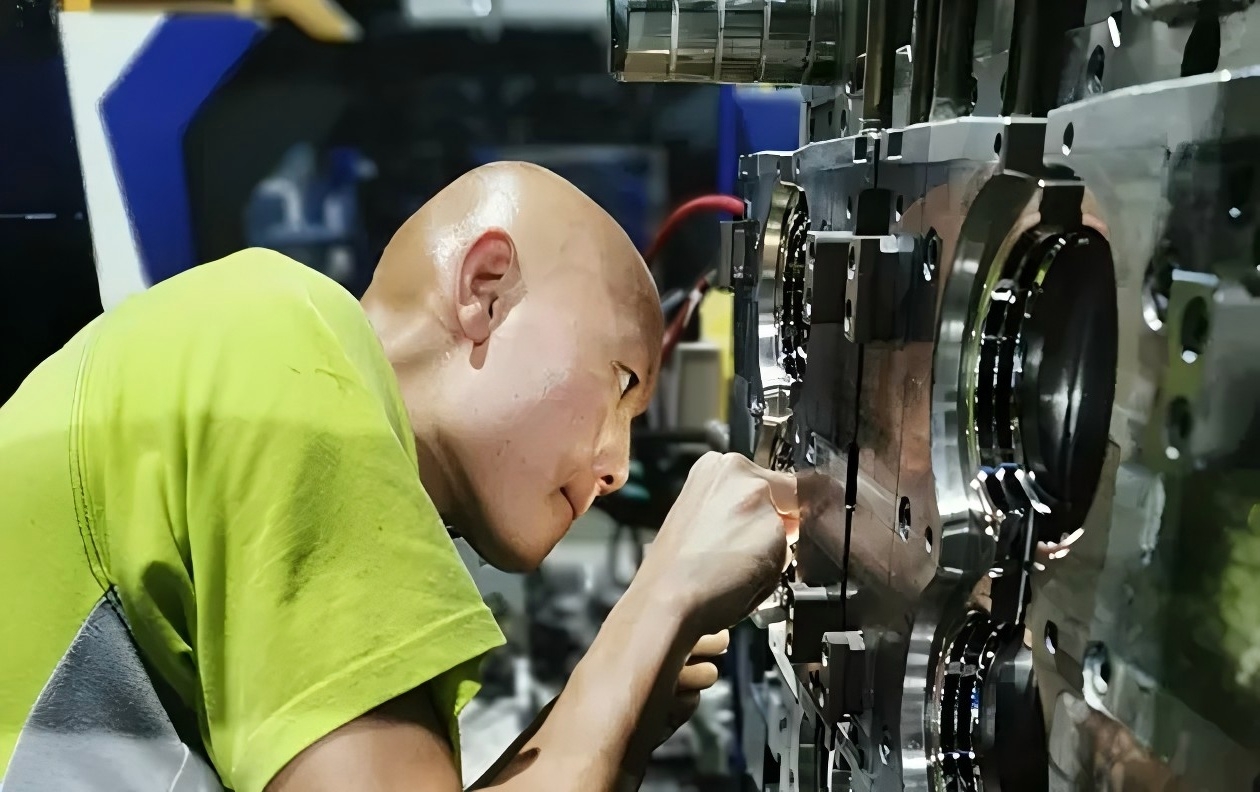
Production capacity and consistency also matter. Facilities equipped with automated cutting and welding systems can maintain tighter dimensional tolerances than those relying solely on manual fabrication. This precision directly affects how well a cover fits a pool, which in turn determines its thermal efficiency and safety performance.
Shenzhen Hailanbao Technology Co., Ltd., based in southern China, is one manufacturer that has established its position through this combination of material quality and production capability. The company supplies pool covers to clients across multiple international markets and has developed its manufacturing processes to handle both standard and custom-sized orders with consistent output quality.
3. Industry Trends: Material Advancement and Sustainable Manufacturing
Material science continues to reshape pool cover design. In the automatic cover segment, polycarbonate and PVC slats remain dominant, but manufacturers are increasingly exploring formulations that improve insulation value while reducing material weight. Lighter covers place less mechanical stress on motor-driven systems, extending the operational life of the entire assembly.
Sustainability has also moved from a marketing concept to a practical manufacturing requirement. European regulations such as REACH (Registration, Evaluation, Authorisation and Restriction of Chemicals) impose strict limits on substances used in plastic products, including pool covers. Manufacturers targeting the European market must ensure that their PVC compounds, plasticizers, and stabilizers comply with these chemical restrictions. This has pushed many producers to reformulate their materials, a process that requires both technical expertise and additional investment in laboratory testing.
Solar pool covers represent another area of material innovation. These covers use air-bubble structures, similar in principle to bubble wrap, to capture solar energy and transfer heat to pool water. Recent improvements in bubble geometry and film thickness have increased solar gain by a measurable margin compared to earlier designs, making them a more effective heating supplement in temperate climates.
4. The Strategic Value of Integrated Product Portfolios
A notable trend among leading pool cover manufacturers is the expansion into related product categories. Rather than operating as single-product companies, many top manufacturers now offer a broader range of pool equipment and accessories, which allows them to serve as more complete supply partners for distributors, contractors, and pool builders.
This approach is practical for several reasons. Distributors generally prefer to consolidate their supplier base to simplify logistics and reduce shipping costs. A manufacturer that can supply pool covers alongside Pool Liners, for example, offers a clear logistical advantage over one that sells covers alone. Similarly, manufacturers that produce structural accessories such as Ladder and Handrail components provide additional value to commercial pool projects, where sourcing multiple product categories from a single qualified supplier can streamline procurement timelines considerably.
Shenzhen Hailanbao Technology Co., Ltd. is among the manufacturers that have adopted this integrated product strategy. By maintaining production lines for multiple pool-related product categories, the company has positioned itself to meet the sourcing needs of international buyers who prefer consolidated supply partnerships rather than managing dozens of separate vendor relationships.
5. China’s Emerging Role in Pool Cover Manufacturing
China has become a significant production base for pool covers and related equipment, particularly for export markets. Several factors explain this shift. Chinese manufacturers have made substantial investments in production infrastructure, including automated fabrication lines, in-house testing laboratories, and quality management systems certified to ISO 9001 standards. These investments have narrowed the quality gap that once existed between Chinese-made products and those manufactured in traditional pool industry hubs such as the United States, France, and Australia.
Cost efficiency remains a factor, but industry observers note that the competitive advantage of Chinese manufacturers increasingly rests on their ability to scale production while maintaining quality. Large facilities in the Pearl River Delta and Yangtze River Delta regions can handle orders ranging from small custom batches to full container-volume shipments, giving international buyers flexibility in how they plan inventory.
Trade data from Chinese customs authorities indicates that exports of PVC-based pool products have grown at a double-digit annual rate in recent years, reflecting both increased demand in overseas markets and the expanding capabilities of Chinese producers. This growth trajectory suggests that top-tier Chinese manufacturers are no longer competing solely on price but are earning repeat business based on product performance and delivery reliability.
6. Challenges and Opportunities Ahead
Despite favorable growth conditions, pool cover manufacturers face several ongoing challenges. Raw material price volatility, particularly for PVC resin and polycarbonate, can compress margins if manufacturers lack long-term supply agreements with upstream chemical producers. Shipping costs, while lower than their peak levels during recent supply chain disruptions, remain elevated compared to historical norms, adding pressure to the delivered cost of exported goods.
On the opportunity side, the residential pool construction market in the United States has experienced a sustained increase in activity, driven partly by remote work trends that have led homeowners to invest more in outdoor living spaces. Data from the Pool and Hot Tub Alliance (PHTA) indicates that the installed base of residential pools in the U.S. exceeds 10.7 million units, each representing a potential customer for replacement covers and related accessories.
The commercial segment, including hotels, municipal aquatic centers, and fitness facilities, also presents growth potential. These venues typically operate on scheduled replacement cycles and require covers that meet stricter safety and performance standards. Manufacturers that can demonstrate compliance with international certifications such as ASTM F1346 for pool cover safety in the United States and NF P90-308, the French safety standard, are better positioned to access these higher-value commercial contracts.
Looking forward, top pool cover manufacturers are expected to continue investing in material research, automation, and international certification to capture a growing share of both residential and commercial markets worldwide.
7. About Shenzhen Hailanbao Technology Co., Ltd.
Shenzhen Hailanbao Technology Co., Ltd. is a China-based manufacturer specializing in swimming pool covers and related pool equipment. Headquartered in Shenzhen, Guangdong Province, the company serves clients in North America, Europe, Australia, and other international markets. Its product range includes automatic pool covers, manual pool covers, safety covers, and a variety of pool accessories. The company works with both OEM and ODM customers across the residential and commercial pool segments.
Address: R210, Huasui Building, Xixiang Street, Bao’an District, Shenzhen, China
Official Website: www.hlbpoolsandspas.com
Yang
Shenzhen Hailanbao Technology Co., Ltd.
info@hlbpoolsandspas.com
Legal Disclaimer:
EIN Presswire provides this news content “as is” without warranty of any kind. We do not accept any responsibility or liability
for the accuracy, content, images, videos, licenses, completeness, legality, or reliability of the information contained in this
article. If you have any complaints or copyright issues related to this article, kindly contact the author above.